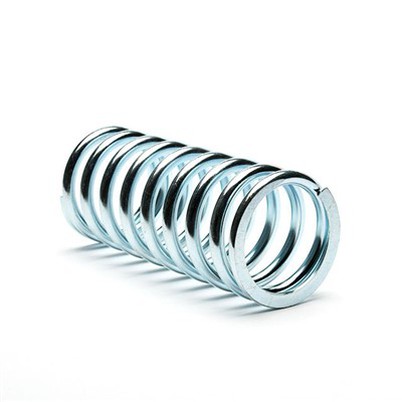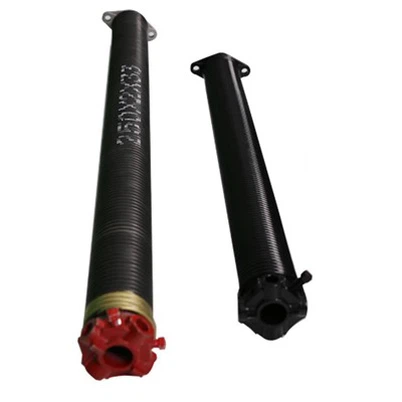


Application And Technical Development Of Springs
Leave a message
At present, the widely used calculation formula of spring stress and deformation is derived from Strength of materials. Without some practical experience, it is difficult to design and manufacture high-precision springs. With the increase of design stress, many previous experiences are no longer applicable. For example, when the design stress of the spring increases, the helix angle increases, which will transfer the fatigue source of the spring from the inner side of the spring coil to the outer side. For this reason, precise analytical techniques must be used, and the currently widely used method is the finite element method (FEM).
The characteristic of vehicle suspension springs is that in addition to sufficient fatigue life, their permanent deformation should be small, that is, their anti relaxation performance should be within the specified range, otherwise the center of gravity of the vehicle body will shift. At the same time, the impact of environmental corrosion on its fatigue life should be considered. As the maintenance period of vehicles increases, stricter requirements are put forward for permanent deformation and fatigue life, and high-precision design methods must be adopted for this purpose. The finite element method can predict in detail the effect of spring stress on fatigue life and permanent deformation, and accurately reflect the relationship between material and spring fatigue life and permanent deformation.
In recent years, the finite element method design method for springs has entered the practical stage, and there have been many reports with practical value, such as the influence of helix angle on spring stress; The relationship between stress and fatigue life calculated using finite element method, etc.