

What Are The 4 Types Of Springs?
Leave a message
Springs are mechanical devices designed to store and release energy. There are four main types of springs, each with its own unique characteristics and applications:
Compression Springs: Compression springs are the most common type of spring. They are designed to resist compressive forces and store energy when compressed. When the force is removed, the spring expands and releases the stored energy. These springs are used in a wide range of applications, from automotive suspensions to industrial machinery.
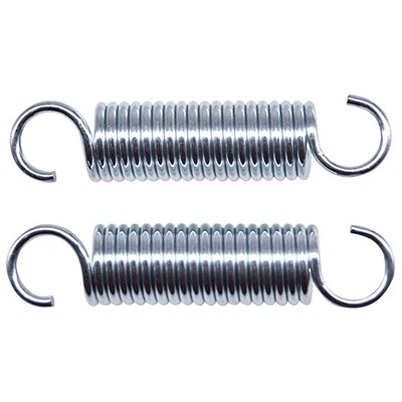
Extension Springs: Extension springs, also known as tension springs, work in the opposite way to compression springs. They are designed to stretch and store energy when pulled apart. When the force is released, the spring contracts and releases the stored energy. Extension springs are commonly found in garage doors, trampolines, and various mechanical systems.
Torsion Springs: Torsion springs operate by twisting or rotating around an axis. When torque is applied to the spring, it stores energy in the form of rotational force. When the torque is released, the spring returns to its original position, releasing the stored energy. Torsion springs are used in applications such as clothespins, door hinges, and various mechanical systems that involve rotational movement.
Constant Force Springs: Constant force springs provide a consistent force throughout their deflection. These springs are typically made by winding a strip of material onto a drum. As the material is unwound from the drum, it creates a constant force regardless of the extension length. Constant force springs are often used in applications like retractable tape measures and window blinds.
Each type of spring has its own set of characteristics that make it suitable for specific applications. The choice of spring type depends on factors such as the desired force, the amount of deflection, and the space available for installation.