

What Are The Three Types Of Steel Springs?
Leave a message
The three main types of steel springs are coil springs, leaf springs, and torsion springs. Each type is designed to serve specific purposes and is characterized by its unique structure and applications.
Coil Springs:
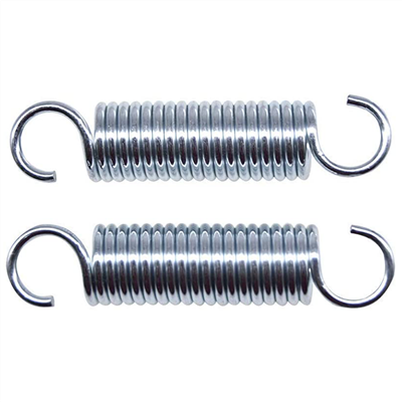
Structure: Coil springs are helical springs made by winding a wire around a cylindrical form. The wire's diameter, pitch, and number of turns determine the spring's characteristics.
Applications: Coil springs are widely used in various applications, including automotive suspension systems, mattresses, industrial machinery, and even in pens and door handles. Their ability to absorb and store energy makes them versatile for both compression and extension applications.
Leaf Springs:
Structure: Leaf springs, also known as laminated or carriage springs, consist of multiple flat steel strips (leaves) of varying lengths stacked on top of each other. The longest leaf, called the master leaf, is usually fixed to the vehicle's frame.
Applications: Leaf springs are commonly used in the suspension systems of vehicles, particularly in trucks, buses, and trailers. They provide support, dampening, and stability, distributing the load evenly across the length of the spring.
Torsion Springs:
Structure: Torsion springs are designed to resist twisting or rotational motion. They typically consist of a coiled wire with legs extending outward at a right angle. When torque is applied to the legs, the spring exerts a force proportional to the angle of deflection.
Applications: Torsion springs find applications in a wide range of products, including garage doors, clothespins, and various mechanical systems where rotational force is necessary. Their ability to store and release energy through rotational motion makes them suitable for numerous engineering applications.
Each type of steel spring has its advantages and is chosen based on factors such as load requirements, available space, and the specific characteristics needed for a particular application. Engineers carefully select the appropriate type of spring based on the desired performance and environmental conditions in which the spring will operate.