

What Is A Power Spring?
Leave a message
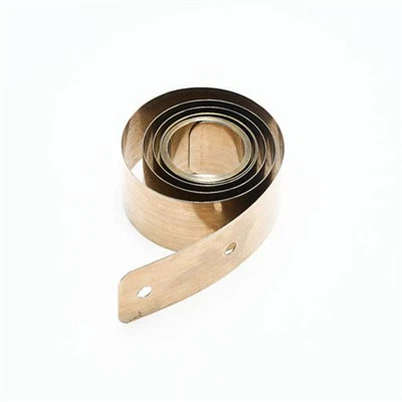
Power springs are formed by wrapping a strip of material around a mandrel and encasing it in a housing or retaining ring. Power springs store and release torque through a central spindle or torque-retaining housing.
What are prestressed power springs?
The prestressed power springs receive additional treatment to produce a slightly flatter torque curve and increase available turns.
Prestressed power springs and power spring uses
Prestressed power springs and power springs are used in many applications where torque is required. Some well-known examples are clocks, toys, seat belts, canister vacuum cleaners, dog leashes, and badge reels. In order to meet different design needs, many parameters must be defined to obtain enough information to start.
power spring
In the design of power springs, some of these key parameters are discussed so that designers can become more familiar with the details and requirements of power springs. When your product requires a power spring you may be asked the following questions:
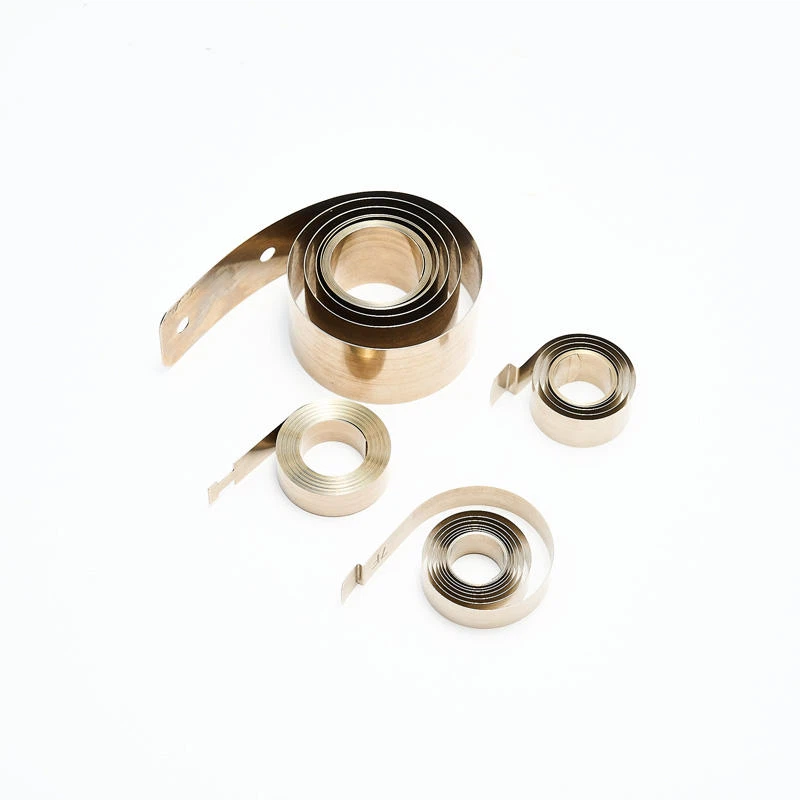
1. How many turns are needed?
The number of effective turns a power spring must provide is crucial information when sizing a spring. Experience has shown that this is also a number that is difficult to obtain early in the design phase. Power springs can go up to 20–25 turns, while prestressed power springs can go up to more.

2.What are the available case widths?
This value is critical in determining the maximum width of the spring steel. If we need to maximize the spring material to achieve the required torque, we need to know how high the housing can go. The spring box usually does not need to take up all the available space, but if the design has been determined we can suggest suitable springs.

3. What is the inner diameter of the box?
Usually, the first question is - and by this we mean the size of the housing that the spring will fit into. Typically, the spring chamber is located inside the rotating wheel. In other cases, the housing is restrained and the central spindle will rotate. In either configuration, once the spring material is sized, knowing the inside diameter allows the number of turns available to be calculated.
The spring material should only occupy approximately 40 – 50% of the available space in the enclosure. If the spring exceeds this allotted space, the number of possible turns will be reduced. If less space is required, the spring can be installed in a smaller housing, saving space and money while providing the same number of revolutions and torque curve.
4. What is the maximum torque?
Torque is the rotational force exerted by a spring when it is released. Friction can cause hysteresis in power springs, which means that more torque is required to wrap the spring than is available when loosened. When discussing torque, it's best to agree on a maximum requirement because the torque of a power spring increases as the spring is wound. Because torque ramps up quickly in the first and last few turns, power springs are typically designed to remain inactive for the first 20% of turns available and the last 20% before the spring is tightened.
There are many other options and factors to discuss when using power springs and prestressed springs. It is recommended to consult with Qianye Precision engineers early in the design process to understand your unique needs and achieve the most effective results.