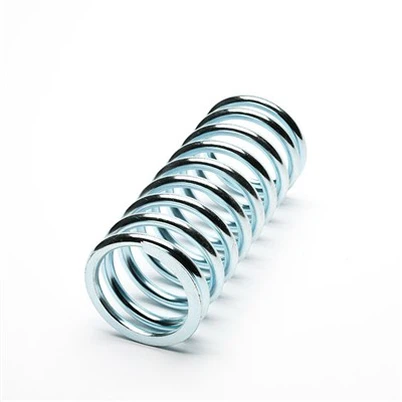


Springs: The Unseen Engineering Marvels
Leave a message
Springs, those seemingly simple yet incredibly versatile devices, permeate our lives in ways we often overlook. From the mattress we sleep on to the door handles we touch, springs are quietly at work, providing essential functions in various applications. In this exploration, we delve into the fascinating world of spring manufacturing, uncovering the intricacies involved in bringing these unsung heroes of engineering to life.
The Ubiquity of Springs
Stewart Lauder, quality manager at Glasgow-based Industrial Springs, emphasizes the omnipresence of springs in our daily lives. "There's basically a spring in every mechanical product," he notes, highlighting their significance across a myriad of applications. Industrial Springs, established in 1964, has been at the forefront of spring manufacturing, producing springs ranging from the thickness of a strand of hair to that of an arm.
The Craftsmanship Behind Springs
1. Formation
The journey of a spring begins with a coil of carbon spring or stainless steel. This coil is placed onto a former, a device that skillfully curves the wire into the precise shape required for the spring. To ensure stability, the top and bottom of the spring are ground flat, allowing it to sit perfectly on a flat surface. "They've got to be sitting straight so the force generated is linear," explains Lauder.
2. Tempering Process
The crucial tempering process follows. The springs are subjected to intense heat, reaching temperatures of 920°C. They are then rapidly cooled in quenching oil before being heated again to 450°C. This meticulous process establishes the optimal level of ductility, ensuring the springs can withstand the forces they will encounter in their respective applications.
3. Finishing Touches
Once tempered, the springs undergo a series of finishing touches. Painting, packing, and preparation for transport are the final steps in this intricate manufacturing process. Lauder mentions that Industrial Springs exports a significant portion of its products to destinations as far-reaching as Australia.
4. Challenges and Changes
Despite the demand for springs, the manufacturing landscape has seen changes. Competition from China has posed challenges, impacting pricing and forcing adaptations. Lauder notes the significant impact on the workforce, with Industrial Springs shrinking from 50 to 12 people over the years.
Technology in Action
To truly understand the craftsmanship behind springs, we take a closer look at the technology in action at Industrial Springs.
1. Spring Coiler
A semi-automatic machine equipped with rollers straightens the wire, which arrives at the factory in a round coil. The points in the center of the machine form it into the desired spring shape. This machine, designed for smaller wire diameters, churns out an astonishing 1,000 springs per hour. Industrial Springs, with its advanced machinery, proudly produces five thousand springs a day.
2. Furnace
Bending thicker springs requires substantial force. Industrial Springs addresses this challenge by using a softer material, such as chrome vanadium, which is then hardened in a 920°C furnace. The springs sit in the furnace for half an hour as the temperature is carefully regulated by gas burners.
3. Quenching Oil
Once the springs reach the desired temperature, they are swiftly removed from the furnace and plunged into a pool of quenching oil. This transformative process changes the grain structure of the metal, turning it from austensite to martensite, making it hard and brittle. The springs are then washed and tempered back to restore ductility.
4. Powder-Coater
Before leaving the factory, the springs undergo powder coating using an electrostatic gun. They are then cured at 230°C. Powder coating not only adds a rust-resistant finish but also caters to aesthetic preferences. "A lot of customers like the springs to match the machine they're selling," notes Lauder.
The Maker's Movement
The spotlight on Industrial Springs came through Make Works, an initiative promoting local manufacturing in Scotland. Fi Scott, the founder of Make Works, emphasizes the need to recognize and integrate these hidden manufacturing gems into the broader economy. "There are thousands of incredible manufacturers like Industrial Springs hidden away in industrial estates, all over the UK," says Scott.
In Conclusion
Springs, often overlooked, are marvels of precision engineering. As we peer into the intricate world of spring manufacturing at Industrial Springs, we gain a newfound appreciation for these unsung heroes. They continue to adapt to the challenges presented by an evolving manufacturing landscape, ensuring their enduring legacy in our mechanical world. Springs, indeed, are everywhere – silently shaping the mechanics of our lives.